Focus on healthcare to drive the active pharmaceutical ingredients market
The
spending on healthcare has grown at a rapid pace in recent years and it
increased at a CAGR of 6.92% between the years 2003 and 2013. The
healthcare spending growth was significantly higher than the population
growth rate that grew at a CAGR of 1.22% for the same period. The per
capita healthcare spending rose from just under US$ 600 in 2003 to above
US$ 1000 in 2013, at an average CAGR of 5.62%. The focus on healthcare
spending was observed to be a global phenomenon and this directly
benefited the active pharmaceutical ingredients market.
Specialty medicines a trend in the active pharmaceutical ingredients market
A
higher generic adoption rate in developed countries that ranges from
27% to 32% is driving global medicine spending and aiding greater access
to improved, lifesaving healthcare services. The adoption of branded
generic drugs is predicted to be higher in emerging economies such as
China and India and generic drugs accounted for nearly 80% of the total
drugs sold by value in these fast-growing nations in 2016. Rising use of
specialty medicines is anticipated to grow the pharmaceutical spending
worldwide with quicker growth in richer, developed nations as compared
to their emerging counterparts. This is primarily because the former
have adequate manufacturing units, a higher spending power, and greater
emphasis on transparent pricing by assessing measuring effects on the
population.
Product offering expansion and cost reduction to help immeasurably
An
intense focus on commercializing drugs and reducing operating costs by
outsourcing R&D activities can improve the organizational efficiency
substantially. Outsourcing at later stages of development through the
appointment of strategic partners can potentially improve operational
efficiencies throughout the value chain. A balanced portfolio approach
goes a long way in expanding sales and simultaneously reducing risk.
This could be by possessing branded generic drugs, branded drugs, and
unbranded drugs within the same portfolio. In addition, clearly defined
forward linkages in the supply chain can garner greater market share in
different regions over the course of the forecast period.
A sample of this report is available upon request @ https://www.persistencemarketresearch.com/samples/11260
Asian countries hold a large chunk of the active pharmaceutical ingredients market
The
vast majority of anti-inflammatory and antibiotic drugs are
manufactured in Asian nations such as China and India. Roughly 4/5th of
the total antibiotic APIs are made in the two countries and then
outsourced to developed countries in Europe and North America. The lower
labor cost and abundant raw material availability needed to make API
are the critical factors responsible for the massive growth in the APAC
API market. In addition to this, regulatory support and government
encouragement to establish API manufacturing hubs by way of favorable
tax policies are helping drive the APAC API market. The large patient
population base that consumes non-controlled drugs over the counter is
also a key factor leading to the boom in APAC in-house API consumption.
Higher growth in the APAC active pharmaceutical ingredients market
Healthcare
spending has witnessed continued growth for some time now. Even though
the proportion of healthcare spending in the APAC region is
comparatively low, the growth rate in this strategic region has outpaced
that of mature markets in North America and Europe. Rising healthcare
spending has led to quality healthcare becoming accessible along with a
higher demand for pharmaceutical products across APAC. The
pharmaceuticals consumed here are mostly produced in onshore
manufacturing units. Furthermore, contract manufacturing organizations
are key outsourcing allies for pharmaceutical companies that supply
their wares to North America and Europe.
Request for Methodology at: https://www.persistencemarketresearch.com/methodology/11260
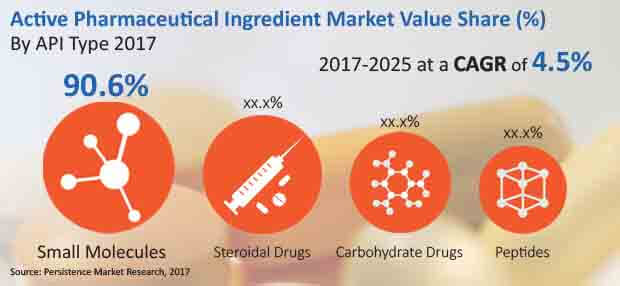
Non-controlled substances have a high CAGR and can be targeted
Non-controlled
substances accounted for a value of more than US$ 43 Bn in the APAC
active pharmaceutical ingredients market in 2016 and are forecast to be
worth almost US$ 46 Bn by 2017 end with a growth rate of 4.5% year on
year. By the end of 2025, non-controlled substances should be worth US$
66 Bn on account of a CAGR of 4.9%, representing a potential goldmine in
the active pharmaceutical ingredients market that can scarcely be
ignored.

No comments:
Post a Comment